How to Move a Business Without the Downtime
October 29, 2026
- Blog

Moving day went to plan. The trucks turned up on time, and everything was unloaded by Sunday night.
Then Monday happened.
A supplier delivered a full load to the old dock. Three customer orders sat unpicked because the stock was still wrapped on pallets. And when someone asked who was meant to tell the supplier, everyone looked at each other.
Knowing how to move a business without losing trade comes down to three things: one person owning the move, picking the right window, and keeping stock flowing while it happens.
Key Points
- Whether you move with your own team or use business relocation services, someone inside the business needs to own the plan.
- Most downtime comes from gaps between people, and one named move coordinator with a shared move log closes most of them.
- A move timed for your quietest weeks, with a short lease overlap, often costs less than closing for a few days.
- Building stock ahead and redirecting suppliers early keeps orders going out while you move.
Who Owns Your Business Move Coordination?
Have you ever organised a group dinner where everyone assumed someone else had booked the table? Yeah, it can happen, and there are a few reasons why. Nobody was told it was their job. Everyone held a piece of the plan, but no one held all of it. And the one person who might have checked was busy with something else.
A business move runs into the same three problems. First, nobody is told the move is their job, so tasks fall to whoever happens to notice them. Second, the pieces are spread across many people. The landlord needs a handover date, building management needs to know when the loading dock will be busy, IT needs a cut-over time, suppliers need a new delivery address, and staff need to know where to turn up. Third, the people best placed to check, usually your operations managers, are flat out keeping the business running.
The hidden cost shows up as paid crews standing around, deliveries refused at a locked gate, and managers pulled off their jobs to fix what should have been sorted a week earlier.

The Quick Win (Low/No Cost)
Name one move coordinator. Give them a single shared move log, even a simple spreadsheet, listing every task, its owner, and its due date. If it isn’t in the log, it isn’t happening.
The Strategic Fix
From about eight weeks out, run a 20-minute weekly move meeting. Record every decision in the log, so nobody relies on memory when plans change in the final fortnight.
When Is the Best Time to Move a Business?
A lease ends on 30 November, so the move gets booked for the last week of November. Only later does someone notice it also falls at the start of the busiest six weeks of the year.
The best time to move is when trading is quietest, not when the paperwork says so. That depends on your business. A retailer will want to avoid November and December. A supplier to building sites might find the Christmas shutdown is the perfect window. Others need to steer clear of the end of the financial year, stocktake or a major customer’s peak. Supplier lead times matter too. If key stock takes six weeks to arrive, you need to know that before you lock in a date.
The hidden cost of moving at the wrong time is lost trade, and it’s usually bigger than people expect. Here’s an illustrative example. A business doing $20,000 a day in sales at a 30% gross margin loses about $6,000 in gross profit for every day it can’t trade. Three days closed is around $18,000, before overtime or the customers who don’t come back. Two weeks of overlapping net rent on a 2,000 square metre warehouse at about $145 per square metre a year is roughly $11,000. The overlap comes out about $7,000 cheaper.
The Quick Win (Low/No Cost)
Mark your quietest trading weeks and key customer peaks on a 12-month calendar before you negotiate any dates.
The Strategic Fix:
Negotiate a short lease overlap so both sites can run side by side. The new site can be set up and receiving stock while the old one keeps trading.
How Do You Keep Orders Moving While You Move?
On Friday afternoon, the last pallets are wrapped and loaded. On Saturday morning, the orders keep coming in.
Customers don’t stop buying because you’re moving. Stock on a truck can’t be picked, and stock that has arrived but hasn’t been put away into its new locations can’t be found. Keeping orders going out depends on two things: stock you can still reach, and inbound deliveries arriving where you actually are. That means building a buffer of fast-moving lines before the move and holding it somewhere it can still be picked and dispatched, much like businesses handle inventory spikes without over-investing. It also means giving suppliers a firm date for when deliveries switch to the new address.
Get this wrong, and the cost is lost orders, refused deliveries, and stock sent to a building that’s already empty. Then there are the extra freight charges to put it right.
The Quick Win (Low/No Cost)
Four weeks out, send suppliers and customers a change-of-address notice with a firm cut-off date. Follow up a week before the move with anyone who hasn’t confirmed.
The Strategic Fix
Build a buffer on your fastest-moving lines and hold it in temporary storage close to your customers. If a gap still appears, a single on-demand transport run can cover an urgent order without pulling trucks off the move.

How to Move a Business and Keep Trading
The smoothest moves are the ones your customers never notice. Put one person in charge, move in your quietest weeks, and keep stock within reach, and you remove the most common causes of downtime. If you’re also working with a carrier, our guide to planning a relocation with a transport partner covers the transport side in detail.
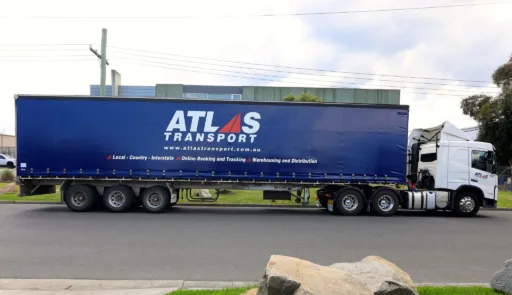
At Atlas Transport, we’ve spent more than 40 years providing commercial relocation services for Australian businesses, across metro, regional and interstate moves.
Planning a move? Let’s have a chat.
Frequently Asked Questions
1. What is a make-good clause, and does it affect our move date?
It requires you to return the old premises to their original condition, such as removing racking and repairing fit-out damage. That work must be done before you hand back the keys, so build it into your move timeline.
2. How much extra stock should we build before moving?
Multiply the average daily sales of your fastest-moving lines by the days at risk, plus a margin for delays. Slow movers can usually wait.
3. Do we need to update our ABN details when we move?
Yes. Address changes must be updated on the Australian Business Register within 28 days. Check your insurance and any licences tied to your address at the same time.
4. When should we update our Google Business Profile address?
Aim for it to go live as you start trading from the new site. Changes can take a few days to be reviewed, so submit it shortly before moving day.
5. Can we keep dispatching orders on moving day?
Usually, yes. Give moving-day orders their own small pick team and an earlier cut-off, so they don’t get mixed up with goods being loaded.
Author

Paul McDowell
National Freight Director at Atlas Transport
With extensive experience in intra and interstate transport, fleet management, and route optimisation, Paul helps Australian businesses navigate complex delivery networks and build highly reliable, delay-free road freight strategies.