3PL vs In-House Logistics: What’s the Best Fit for Your Business?
April 30, 2026
- Blog
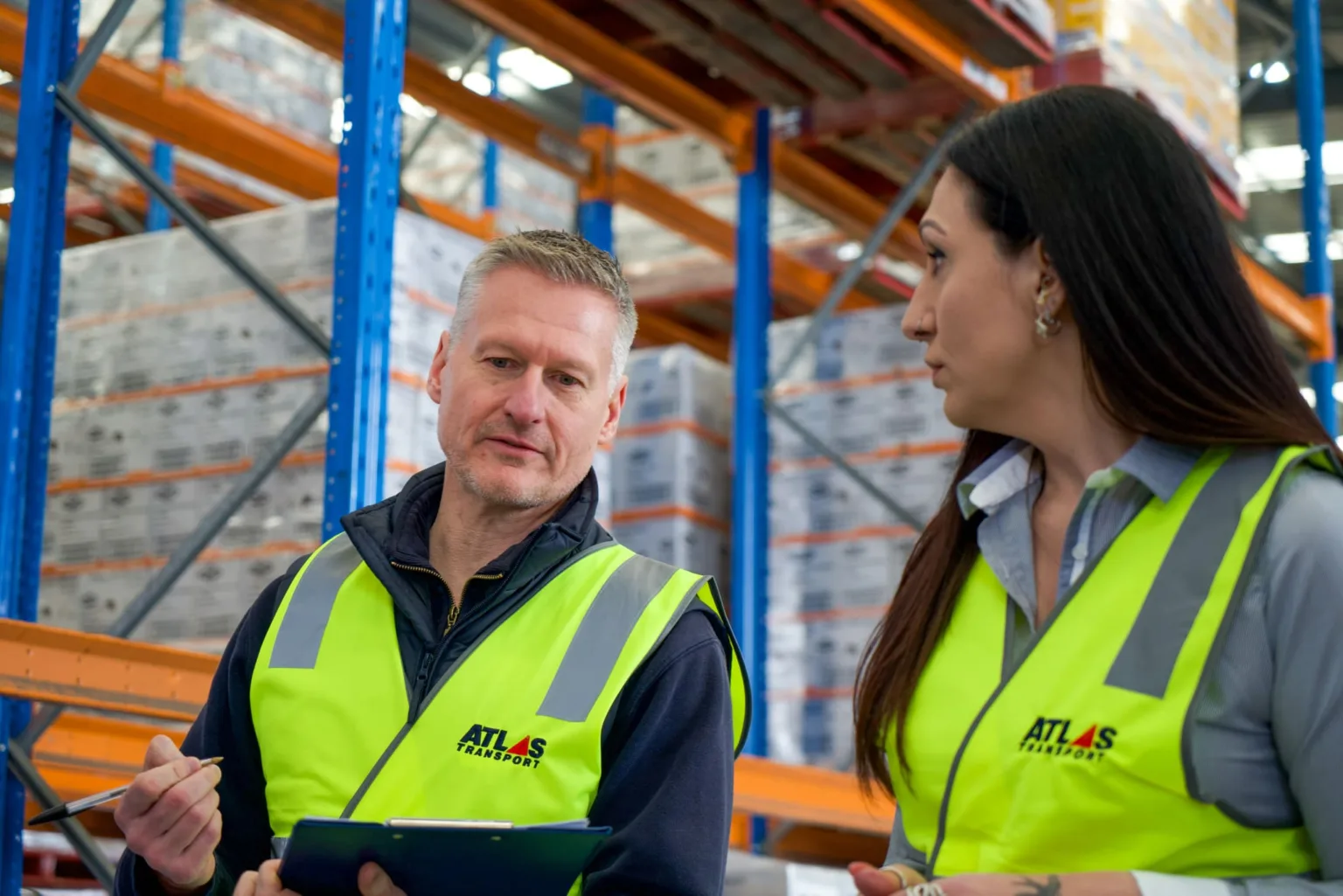
For many Australian businesses, logistics starts small. A small internal team manages stock, books freight, checks deliveries, and keeps customers updated. But as order volumes increase and delivery networks stretch across metro, regional, and interstate lines, storage gets tight, and freight issues take more time to fix.
That is when the strategic decision becomes unavoidable: do you continue investing in your own in-house logistics, or is it time to bring in outside 3PL (Third-Party Logistics) support?
The right answer depends on your cost structures, service expectations, and how much operational pressure your team is carrying. Here is how to audit your current logistics setup and determine which model is the most profitable and sustainable fit for your business’s future.
Key Takeaways
- The Hidden Admin Drain: In-house logistics often conceals massive labour costs, with senior staff spending hours chasing freight instead of driving growth.
- Fixed vs. Variable Costs: In-house logistics locks you into fixed overheads (leases, salaries), while 3PL shifts you to a scalable, variable cost model.
- The Complexity Tipping Point: Outsourcing makes the most sense when your delivery network expands across multiple states or requires varied vehicle types.
- Control vs. Expertise: In-house offers direct control over handling; 3PL offers access to enterprise-grade technology, national networks, and specialist expertise.
Evaluating the Hidden Costs: Fixed vs. Variable
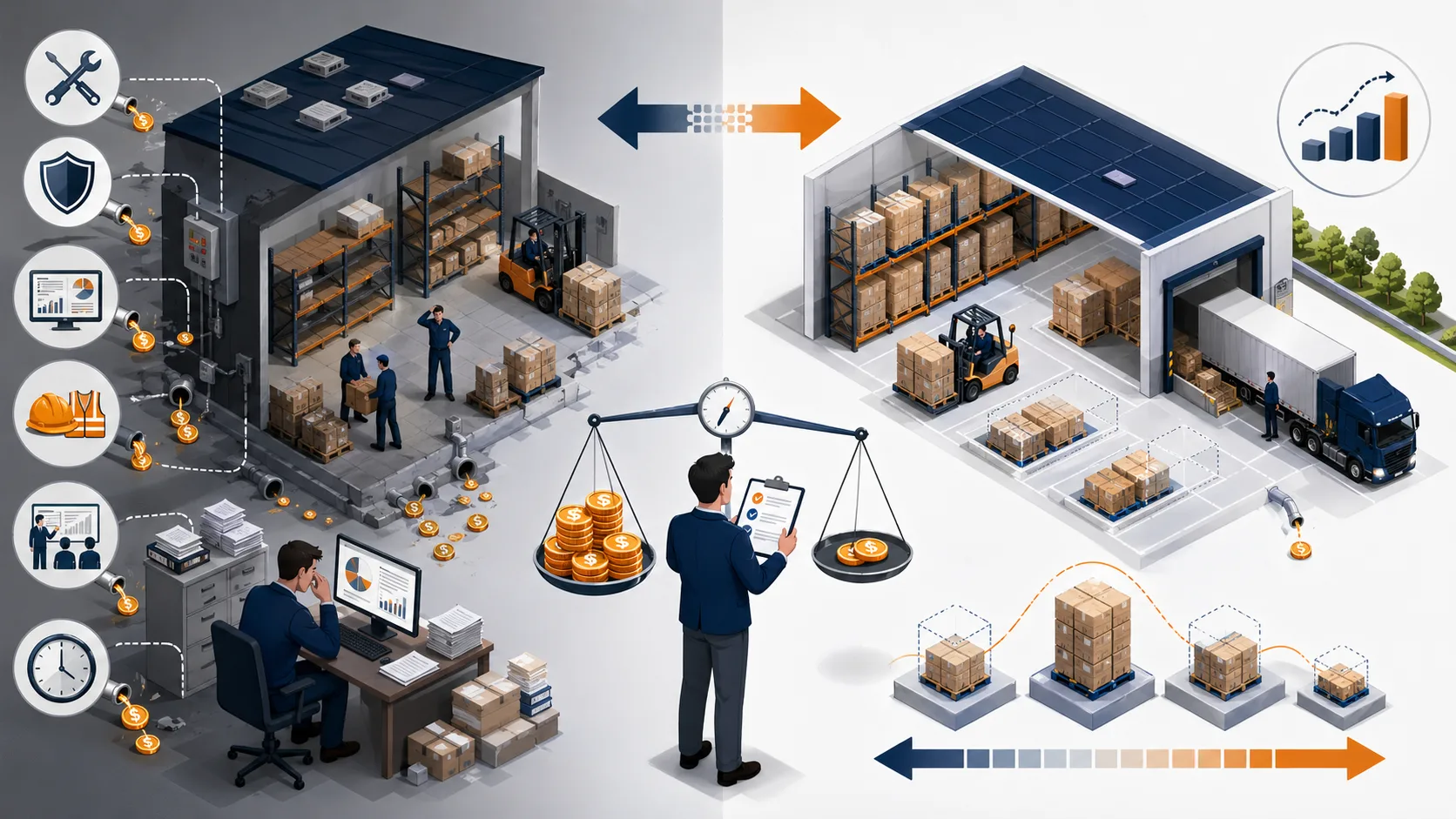
The most common mistake businesses make when comparing these two models is only looking at the surface-level costs. They compare a 3PL quote against their current warehouse lease and decide that in-house is cheaper.
But in-house logistics carries heavy, fixed, and often hidden costs: equipment maintenance, warehouse insurance, safety compliance, WMS software licenses, staff training, and overtime during peak seasons.
The Quick Win (Low/No Cost):
- Run a “Shadow Roster” Cost Audit: For the next 7 days, ask your operations and customer service managers to log exactly how much time they spend on logistics admin—chasing delayed trucks, fixing dispatch errors, or managing warehouse rosters. Multiply those hours by their hourly rate. You will quickly discover the true, hidden cost of managing logistics in-house.
The Strategic Fix:
- Transition to Variable 3PL Pricing: If your sales fluctuate due to seasonality or project cycles, keeping logistics in-house means you pay for empty shelves during quiet months. Partnering with a 3PL shifts those fixed overheads into variable costs; you only pay for the exact pallet spaces and freight movements you use, protecting your profit margins year-round.
Assessing Capacity and Scalability
In-house logistics works incredibly well when your order volumes are steady, your warehouse space is ample, and your delivery routes are highly predictable. However, growth is rarely linear.
When you land a massive new retail contract or expand into a new state, an in-house model forces you to quickly sign new commercial leases and hire more staff—tying up vital capital.
The Quick Win (Low/No Cost):
- The 30-Day Friction Review: Look back over the last month of operations. Tally up your missed dispatches, urgent (premium) freight bookings, and customer complaints regarding late deliveries. If these friction points are trending upwards, your internal capacity has likely reached its ceiling.
The Strategic Fix:
- Secure, Scalable, Multi-Node Infrastructure: A mature 3PL provider already operates an established network of facilities and transport fleets. By outsourcing, you instantly gain the ability to scale your storage footprint up or down and push stock closer to your end customers, without the capital exposure of doing it yourself.
The Control vs. Expertise Trade-Off
The primary benefit of in-house logistics is absolute control. If you have highly specialised goods, strict handling regulations, or a very specific unboxing experience, keeping operations internal ensures your team oversees every touchpoint.
However, as logistics becomes more complex, maintaining that control requires deep expertise in Chain of Responsibility (CoR), route optimisation, and inventory technology.
The Quick Win (Low/No Cost):
- Standardise Internal SOPs: Before deciding to scale internally or outsource, document your exact logistics processes. Create rigid Standard Operating Procedures (SOPs) for receiving, picking, and dispatch. If you cannot easily document how your warehouse runs, you aren’t ready to scale it—and you’ll struggle to clearly communicate your needs to a 3PL, making the transition difficult.
The Strategic Fix:
- Partner for Systems Integration: The right 3PL doesn’t take away your control; they enhance your visibility. By integrating your ERP with a 3PL’s advanced Warehouse Management System (WMS), you get enterprise-grade, real-time data on your inventory and freight, without having to purchase or manage the software yourself.
Stop Letting Logistics Hold Back Your Growth
The decision is rarely about one model being universally “good” and the other “bad.” It is about whether your current setup still matches the size, pace, and reach of your business. If your current setup is working and profitable, keep it. But if storage constraints, dispatch errors, or freight administration are holding your team back from focusing on core growth, it’s time to pivot.
At Atlas Transport, we support Australian businesses with flexible 3PL logistics and warehousing solutions built around practical planning, clear visibility, and reliable service. We handle the complexity of storage and national distribution so you can get back to growing your business.
Ready to build a more profitable logistics model?
Frequently Asked Questions
1. What exactly does a 3PL logistics company do?
A 3PL (Third-Party Logistics) company manages storage, stock handling, order fulfilment, and freight coordination for another business. The provider executes the operational logistics tasks while you retain complete ownership of your goods and brand.
2. Is outsourced logistics cheaper than in-house logistics?
It depends on your fixed costs, labour, space, and freight volume. Outsourced 3PL support is generally more cost-effective for growing businesses because it turns fixed infrastructure overheads into scalable, variable costs that align perfectly with your revenue.
3. When should a business move away from managing everything in-house?
You should review your model when warehouse storage becomes permanently tight, urgent transport costs increase, delivery areas expand into new states, or when your senior staff are spending too much time managing dispatch administration.
4. What types of businesses use 3PL companies in Australia?
Manufacturers, major retailers, agriculture suppliers, timber businesses, construction firms, and commercial relocation teams heavily utilise 3PL support. It is highly effective whenever storage, fulfilment, and freight need to work together seamlessly across different metro and regional locations.
5. How do I compare 3PL logistics providers in Australia?
When comparing providers, look beyond the initial storage rate. Assess their national transport coverage, the quality of their reporting and WMS technology, their safety and CoR compliance systems, and their communication protocols.
Author

Dan Hill
Client Success Lead and Supply Chain Strategist at Atlas Transport
Dedicated to managing delivery expectations and reducing supply chain friction, Dan partners with Australian businesses to unravel logistics complexity and build transparent, highly reliable freight solutions.
With a focus on 3PL partnerships, supply chain consolidation, and scalable operations, he also helps businesses transition from fixed infrastructure to highly efficient, growth-ready logistics models.